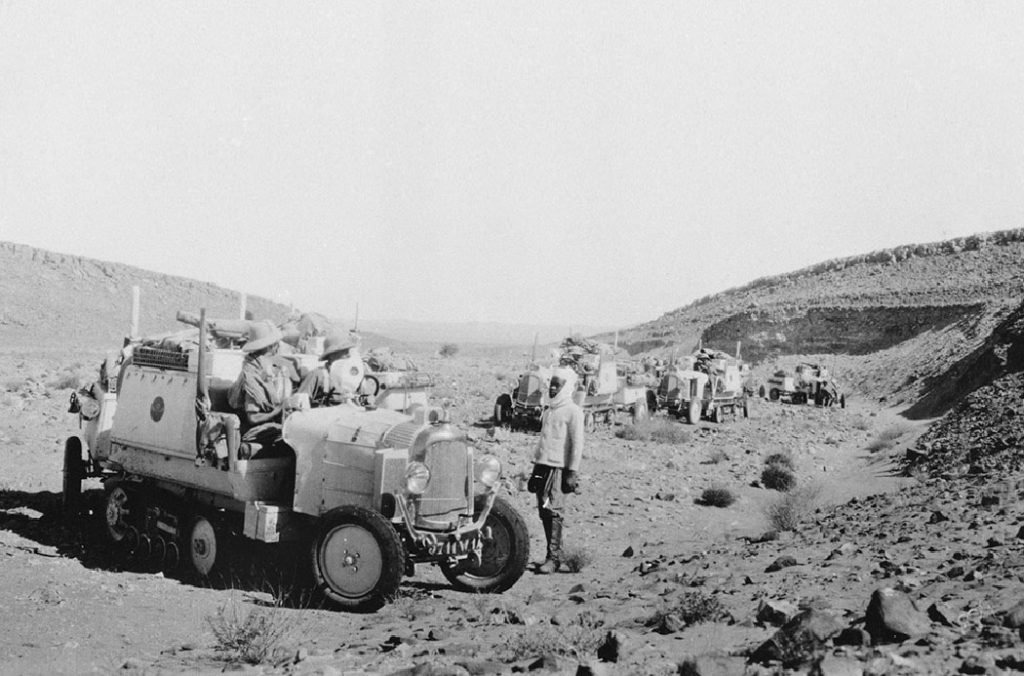
In October 1924, 8 Citroën vehicles fitted with half-tracks departed on the Croisière Noire, a 20,000 km journey across Africa. Almost 100 years later, we were involved in the authentic restoration of one of these historical vehicles: the Scarabée d'Or. A project that perfectly illustrates what we have been doing since 1893: recreating leather bellows and seals that no one else can manufacture.
The expedition was organised by Georges-Marie Haardt on behalf of Citroën. The objective was twofold: to promote the brand by proving the robustness of its technologies on extreme terrain, and to open a regular motorised route across the African continent. From Algeria to South Africa, several Citroën 10 HP Type A vehicles fitted with Kégresse half-tracks crossed environments where no motorised vehicle had ever travelled. The expedition groups returned to France in 1925, bringing back objects, sketches, botanical plates and photographs that today constitute an exceptional heritage.
In 2016, the École Nationale Supérieure des Arts et Métiers de Cluny undertook the complete restoration of one of these half-tracks. A considerable technical challenge. Many original parts were impossible to find commercially. The materials used at the time — including leather for mechanical connections and automotive sealing — were no longer manufactured by anyone. The school then approached us to recreate to the original specifications the rear axle bellows of the Scarabée d'Or. These bellows ensured the sealing between the two parts of the rear drive wheel. Without them, authentic restoration was impossible.
Captivated by the project and drawing on our experience in manufacturing leather bellows, we decided to bring our assistance to the Cluny students. We studied the original parts, analysed the dimensions and characteristics of the leather used at the time, and manufactured the bellows to the original specifications. At the time of the Croisière Noire, the use of leather for mechanical connections and automotive sealing was common. Leather was the reference material for these applications, precisely because it offers flexibility, mechanical resistance and longevity that few synthetic materials achieve on dynamic applications.
This restoration project illustrates a reality that we experience regularly at Emile Janique. We are often the last resort when a leather part no longer exists anywhere. Because we are one of the few manufacturers in Europe who still master this expertise, we can recreate parts that no one else can reproduce.
This type of project is not exceptional for us. We regularly receive requests from clients who need to recreate leather parts whose references no longer exist in the manufacturer's catalogue. Classic vehicles, old industrial machines, equipment whose original parts have disappeared from the market. Our answer is always the same. Send us your worn part or a dimensioned sketch and we study the feasibility. In the vast majority of cases, we can recreate the part to the original specifications or in an equivalent material.
Whether for the restoration of a historical vehicle, an old agricultural machine or industrial equipment whose original parts no longer exist, our team studies your request and proposes a solution. No minimum quantity. No tooling costs. We manufacture from your existing part or your dimensions, from a single unit.